

Technical, design and systems integration management
Unresolved requirements and interfaces can delay procurement, fragment design and disrupt delivery. We coordinate technical requirements, designers, suppliers and integration decisions across Transport and Energy projects, so each stage has the information and decisions it needs to progress.
Project Delivery
Manage technical work as the project develops
Several designers or suppliers may each be progressing their own scope while requirements, design decisions or interfaces remain unresolved. A technical decision can affect procurement, design, installation, testing, cost and programme.
Clarus Caelum coordinates the technical and integration work needed to resolve those dependencies and progress the current stage. Testing, commissioning and operational transition are planned within that wider responsibility.

Responsibilities we can take on
Coordinate appointed designers, technical disciplines and specialist suppliers.
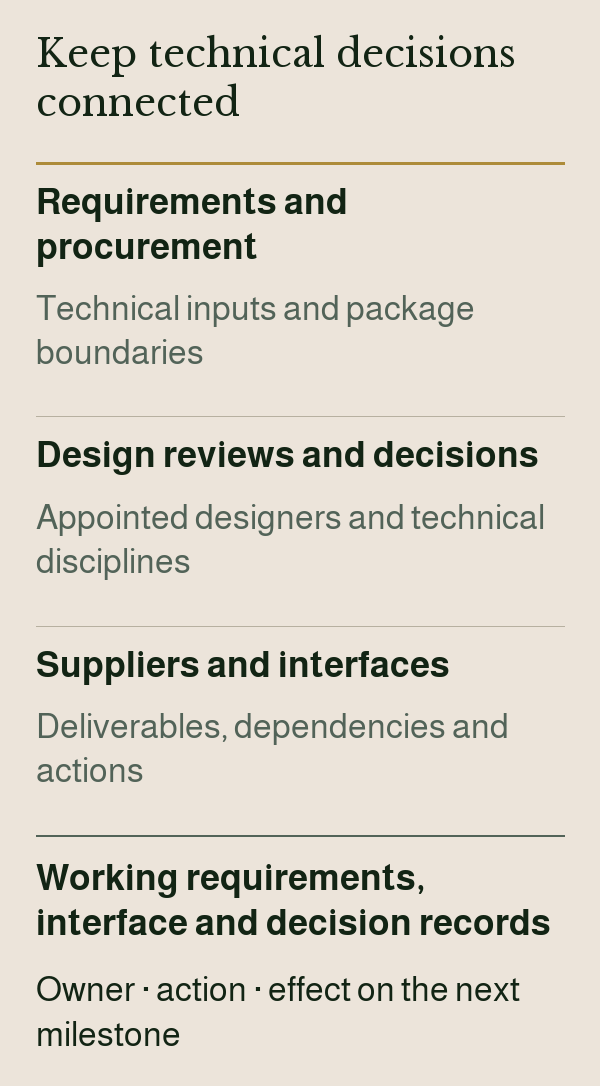
Clarify requirements, package interfaces and technical inputs for procurement.
Manage design reviews and decisions, including their cost, programme and delivery consequences.
Plan systems integration and coordinate the activities needed across packages.
Track technical issues, interface actions and evidence as the work progresses.
Coordinate the technical inputs to testing, commissioning, acceptance and handover.
Designers and specialist suppliers remain accountable for their agreed technical work. The client retains the agreed acceptance authority.
Technical management and integration across stages
Requirements and interfaces are managed progressively. The next decision matters at every stage.
Concept and planning
Clarify technical requirements, options, dependencies and decision responsibilities.
Procurement
Define technical inputs, package interfaces and supplier responsibilities.
Design
Coordinate reviews, resolve design decisions and agree interfaces.
Delivery
Manage integration sequences, supplier actions and technical changes against milestones.
Testing and commissioning
Coordinate technical evidence, defects and verification across packages.
Operational transition
Connect remaining technical conditions with the client's acceptance and support arrangements.
Resolved decisions and coordinated delivery
You receive coordinated technical, design and integration plans, together with working requirements, interface and decision records. Each issue is connected to its owner, required action and effect on the project.
We use those controls with the responsible parties to progress procurement inputs, resolve design decisions, coordinate supplier work and address dependencies before they delay the next milestone. Later-stage evidence also supports testing, commissioning and the client's acceptance decision.
A framework for this decision
Integration Dependency and Evidence Map
Trace the dependencies, evidence and permissions supporting each route to a required outcome.
Connecting a motorway control system with its operating environment
Timothy Scott held senior delivery accountability for a major motorway operational-systems programme. His work connected civil readiness, mechanical and electrical systems, communications, field equipment, control software, suppliers and operator requirements.
Integrated controls and progressive verification kept the interfaces, technical evidence and operational transition within one delivery view.
Use the Delivery Health Check
The Multi-Supplier Delivery Health Check exposes delivery, interface and governance risks in about 15 minutes. If the immediate concern is testing, handover or operational acceptance, the Readiness Checklist provides a focused companion route.
Discuss technical or integration support
Describe the project stage, technical decisions, design packages or suppliers that need coordination. We can define the technical and integration management required to progress the work, from early requirements to delivery and operational transition.